
A little more
about my work.
A little history behind BAMP Film
BAMP Film takes its name from my great-grandfather, affectionately known as Bamps.
The name began when the children in the family struggled to pronounce Grandpa, calling him ‘Bam-pah’ instead. Eventually, Bamps stuck, and before long, that’s what everyone in town called him.
He was a watchmaker, clock repairer and sound engineer who even helped develop the tiny spring mechanism that prevented record players from scratching records.
He was also the father of my nan, who was unquestionably my biggest supporter.
I’ve always liked the connection between his fascination with time and my own work. After all, film cameras are fundamentally timing devices, and the traditional process of colour grading film was known as colour timing.
It’s a slightly tenuous connection, perhaps, but one I rather like.
More importantly, BAMP Film is a small tribute to two people who meant an enormous amount to me.
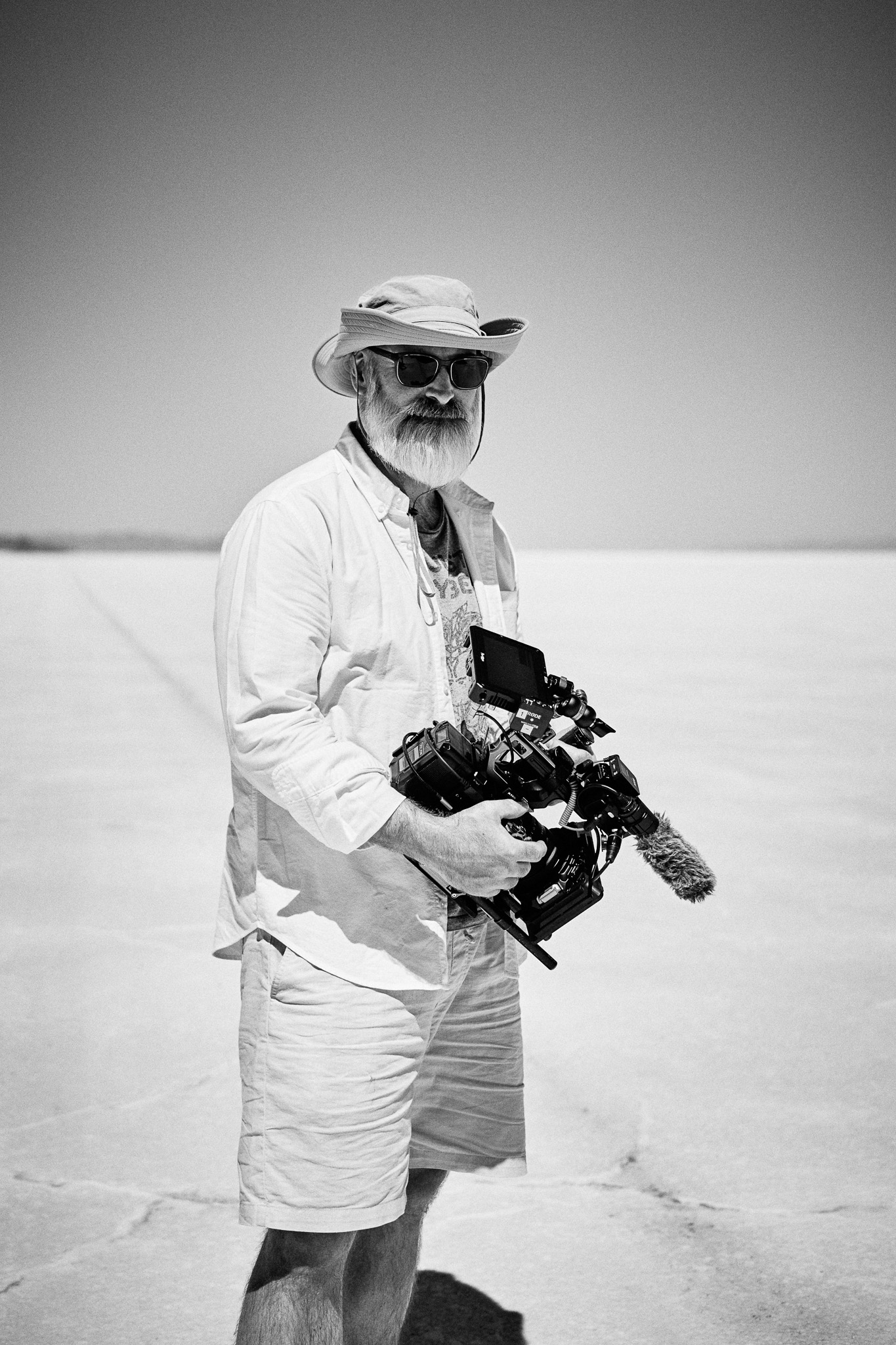
From darkrooms to racetracks
My relationship with cameras began long before I considered making a living from them.
My dad built a photographic darkroom at my nan’s house, where we developed our own prints using enlargers, chemicals and photographic paper. I later studied art and film photography at A-level, but it was adventure sports that really drew me towards moving pictures.
Motorcycling, climbing, diving, skiing and snowboarding were all part of my life, and naturally, I wanted to film the things my friends and I were doing.
I found my way into filmmaking professionally in my mid-twenties, at what I still consider one of the industry’s most exciting periods.
Digital cinematography was beginning to challenge traditional film production, while photography and filmmaking were starting to share the same tools. Independent filmmakers were experimenting with depth-of-field adapters, building their own camera rigs and pushing affordable equipment to achieve results previously reserved for much larger productions.
There was a wonderful spirit of experimentation. If you couldn’t afford the equipment to achieve a particular shot, you found another way.
My first significant break came when Motorcycle News recognised footage I’d shot at a British Superbike event. That led to opportunities within motorsport and eventually working alongside the Buildbase Kawasaki British Superbike team, filming interviews, race coverage and behind-the-scenes stories.
I was hooked.
Finding the story
Alongside motorsport, I immersed myself in cinematography, studying lighting, visual storytelling and filmmaking while collaborating on short films with like-minded people.
Those connections gradually led to television, music videos, drama and documentary work.
Documentaries particularly appealed to me. I’ve always enjoyed listening to interesting people talk about their lives, and my background in portrait photography developed into a fascination with lighting faces and telling stories through images.
I’ve since been fortunate to work on documentaries exploring the lives of Alec Guinness and Peter O’Toole, the latter directed by Jim Sheridan, alongside short films, features, commercials and television productions.
I also received a Best Cinematography award for the short film Aneni.
A camera rarely stays still
Perhaps unsurprisingly, given my background in action sports, I’ve always loved moving the camera.
What began with handheld cameras and experimental stabilisation systems gradually progressed through professional gimbals and body-mounted rigs, eventually leading me towards Steadicam.
I’m a Tiffen-trained Steadicam operator, having completed their Silver Workshop, and have demonstrated Steadicam equipment at the British Society of Cinematographers Expo.
My operating work now includes live sports, football, broadcast television, commercials and drama.
One particularly memorable challenge was operating a custom Steadicam system for the BBC’s live coverage of the 2024 UK general election, combining wireless camera transmission, real-time spatial tracking and Unreal Engine to integrate live camera movement into a virtual environment.
It was exactly the sort of technically ambitious project I enjoy, where complicated technology has to work seamlessly in front of a live audience.
The long game
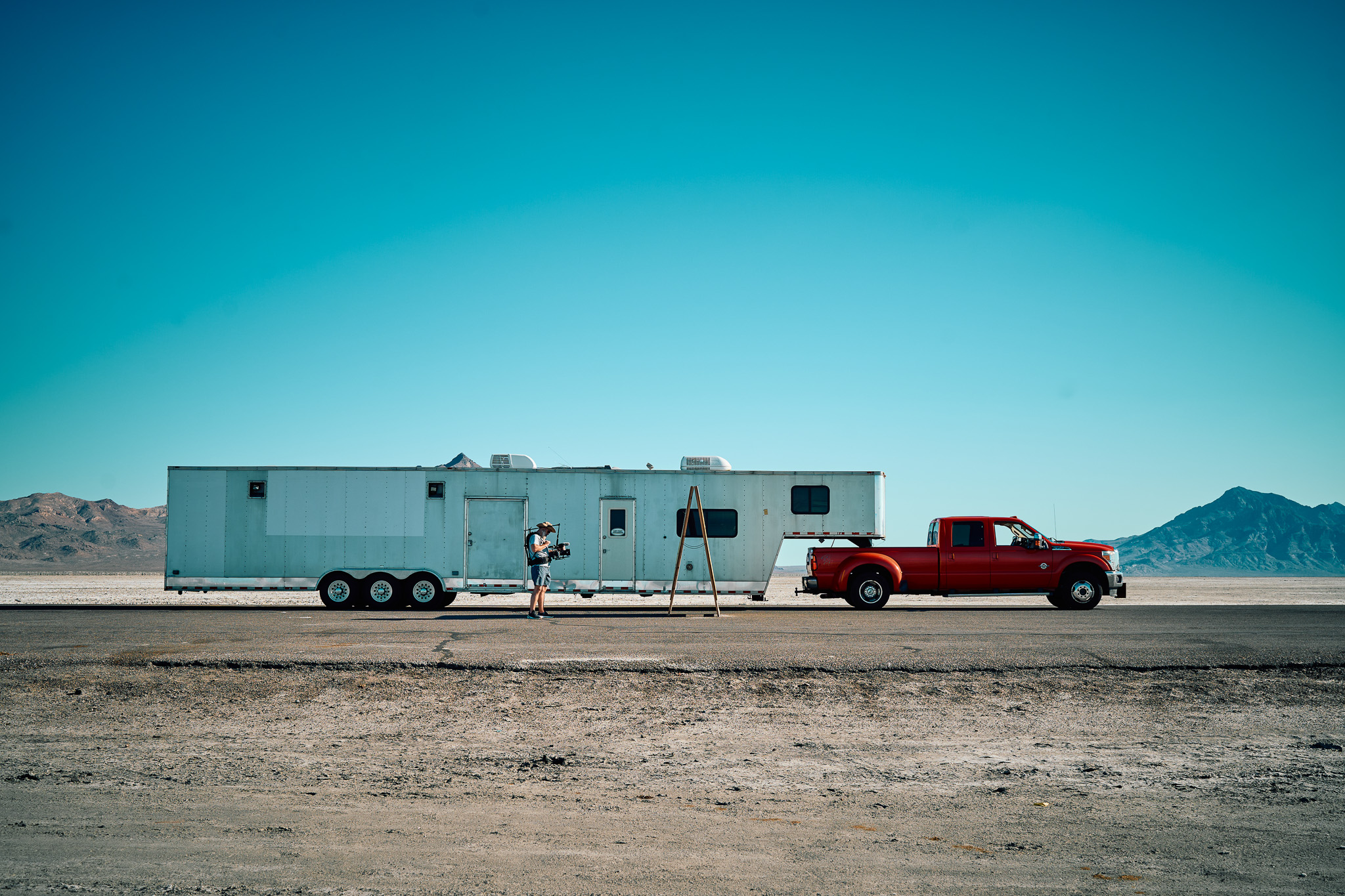
One of the most personal projects I’ve been involved with is an ongoing documentary following British cyclist Neil Campbell and his pursuit of 200mph on a bicycle.
We’ve been filming his journey for more than twelve years, from the Bonneville Salt Flats in Utah to the heat of Arkansas and the considerably less predictable weather of Yorkshire.
It’s been an extraordinary adventure, following the determination, engineering, setbacks and friendships behind an ambitious sporting goal.
Projects like this remind me why I got into filmmaking in the first place. Sometimes the most interesting stories take years to tell.
Still learning, still filming
Based in London, my work has taken me across the UK and around the world, including the United States, Singapore, the Netherlands, Sweden, Slovenia, France, Greece and the Bahamas.
Today, I work across documentary, live news and broadcast, commercial productions and Steadicam operating.
I also run annual screen acting and cinematography workshops at Elstree Screen Academy, sharing some of what I’ve learned with the next generation of filmmakers.
Despite the enormous changes in technology, the part I enjoy most hasn’t really changed since those early days filming motorcycles with my friends.
I still love cameras, I still love figuring out how things work, and I still love finding an interesting story worth telling.
And I suspect Bamps, with his clocks, watches and fascination with engineering, would have enjoyed having a look around my camera kit.
Anthony B